
Specialty & Hard-to-Fit Contact Lenses

Dr. Daisy Mendez Weiland has particular expertise in fitting hard-to-fit contact lens patients at Perspective Eyes in Winnetka, Illinois. She works with patients whose needs are not met by conventional contacts, including those with keratoconus, irregular corneas, and severe dry eye. If previous contacts have been uncomfortable or have not provided clear vision, she evaluates which specialty contact lens options may better suit your eyes.
What does "hard-to-fit" mean for contact lenses?
"Hard-to-fit" describes eyes that need a more individualized contact lens design or fitting approach. Keratoconus, irregular corneas, severe dry eye, or difficulty wearing conventional contacts can make a specialty evaluation helpful.
Can specialty contacts help if regular lenses are uncomfortable or blurry?
You may still have contact lens options even if previous lenses have been uncomfortable or have not provided clear vision. Dr. Daisy evaluates the cause of the difficulty and whether a different lens design may help. The recommendation depends on your eyes. Not every patient who struggles with regular contacts needs the same type of specialty lens.
Which specialty contact lens options are available?
Specialty lens options described at Perspective Eyes include rigid gas-permeable, scleral, limbal-fit, and hybrid contact lenses. Each has a different design, and suitability depends on your corneal shape, eye health, vision needs, and lens tolerance.

Rigid Gas-Permeable (RGP) Lenses
Corneal RGP lenses are small, firm lenses made from materials that allow oxygen to pass through. Their rigid optical surface can provide clearer vision for some patients with irregular corneas when conventional soft lenses are not adequate.
Scleral Contact Lenses
Scleral lenses are larger rigid gas-permeable lenses that vault over the cornea and rest on the tissue over the white part of the eye. A fluid reservoir between the lens and cornea can support vision and comfort for selected patients with keratoconus, irregular corneas, or severe dry eye.
Limbal-Fit Contact Lenses
Limbal-fit lenses are specialty rigid lenses designed to extend toward the limbus, the border between the cornea and the white part of the eye. Their fit is evaluated individually as an alternative to smaller corneal lens designs.
Hybrid Contact Lenses
Hybrid lenses combine a rigid gas-permeable center with a soft outer skirt. This design combines the optics of a rigid lens with a soft surrounding portion and may be considered for selected patients with complex vision needs.
How do you determine which lens is right for my eyes?
Dr. Daisy considers your corneal shape, eye health, prescription, previous lens experience, and day-to-day needs when recommending a lens. Fit, vision, and comfort are assessed rather than choosing a lens type based on a diagnosis alone. Specialty lenses may improve vision with keratoconus, but they do not stop the condition from progressing. Patients with severe dry eye may also need other care; explore our Dry Eye & Ocular Aesthetics page.
How much do specialty contact lenses cost?
Cost depends on the lens design, the number of fitting visits, and your insurance benefits. Many plans help with medically necessary specialty lenses. The office will check your coverage and give you a quote after your evaluation.
What should I expect during a specialty contact lens fitting?
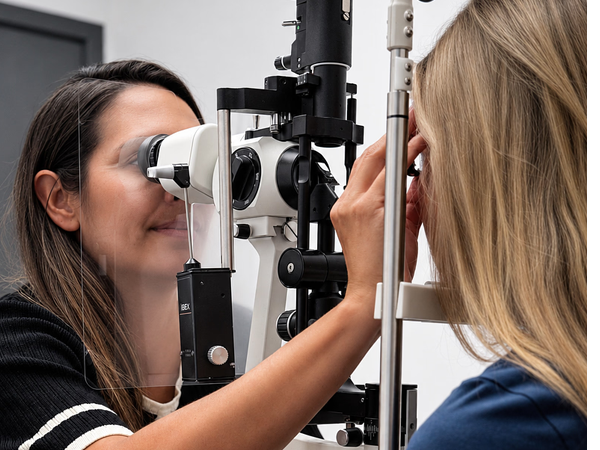
A specialty contact lens fitting generally includes an eye health assessment, corneal measurements, and evaluation of lens fit and vision. Adjustments and follow-up visits may be needed to refine the fit. If lenses are prescribed, instruction on insertion, removal, cleaning, and safe wear helps you learn to use them. The office can explain the appointment sequence for your particular needs
Request a Hard-to-Fit Contact Lens Evaluation
Call (224) 255-6450 or use Schedule a Visit. Tell the office you are seeking a specialty contact lens fitting so they can guide you to the appropriate appointment. Button:
Schedule a Visit

- Monday 9:00am - 5:00pm
- Tuesday 9:00am - 4:00pm
- Wednesday 10:00am - 5:00pm
- Thursday 9:00am - 4:00pm
- Friday 9:00am - 2:00pm
- Saturday 9:00am - 1:00pm*
- Sunday Closed
PERSPECTIVE EYES provides personalized eye exams, medical eye care, specialty contact lenses, dry eye, and designer eyewear in Winnetka, Illinois. We proudly welcome patients from Winnetka, Wilmette, Glencoe, Northfield, Kenilworth, Highland Park, and throughout Chicago's North Shore.
© 2026 Perspective Eyes - All rights Reserved - Accessibility Statement - Privacy Policy - Sitemap
Powered by:
